
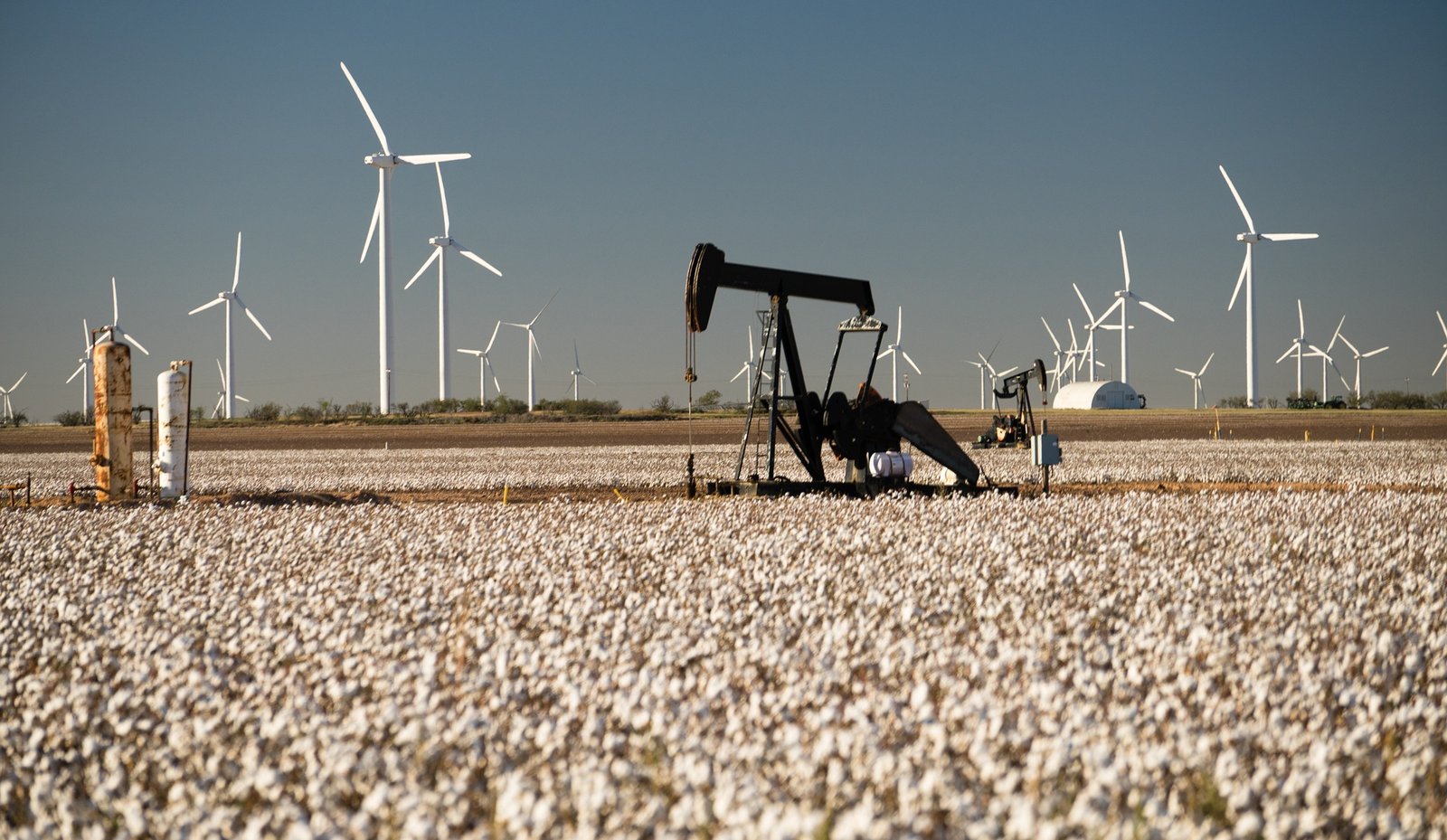
Even in today’s volatile geopolitical climate, many accredited investors evaluating the asset class still conclude that oil and gas remain a good investment in 2026. But this is only the case when approached with the right structure, operator, and allocation.
Direct Oil & Gas investments can deliver tangible, asset-backed cash flow paid from physical production, tax efficiency unique to upstream energy, an inflation hedge tied to commodity prices, and generally lower correlation to broad equity indices. The asset class also carries, not uncommonly, risks that every investor should understand before committing capital, including geological risks, commodity price risks, and operational risks.
This article sheds light on why oil and gas investing in 2026 might, or might not be, a good addition to one’s portfolio, how investors use the four pillars to assess opportunities, the concept of the three-risk framework, and a practical FAQ for accredited investors evaluating deals. Download Sovereign Energy Partner’s comprehensive Investor Guide here to gain a wider perspective on U.S. oil and gas investment principles and opportunities.
What “Oil and Gas Investing” Actually Means in 2026
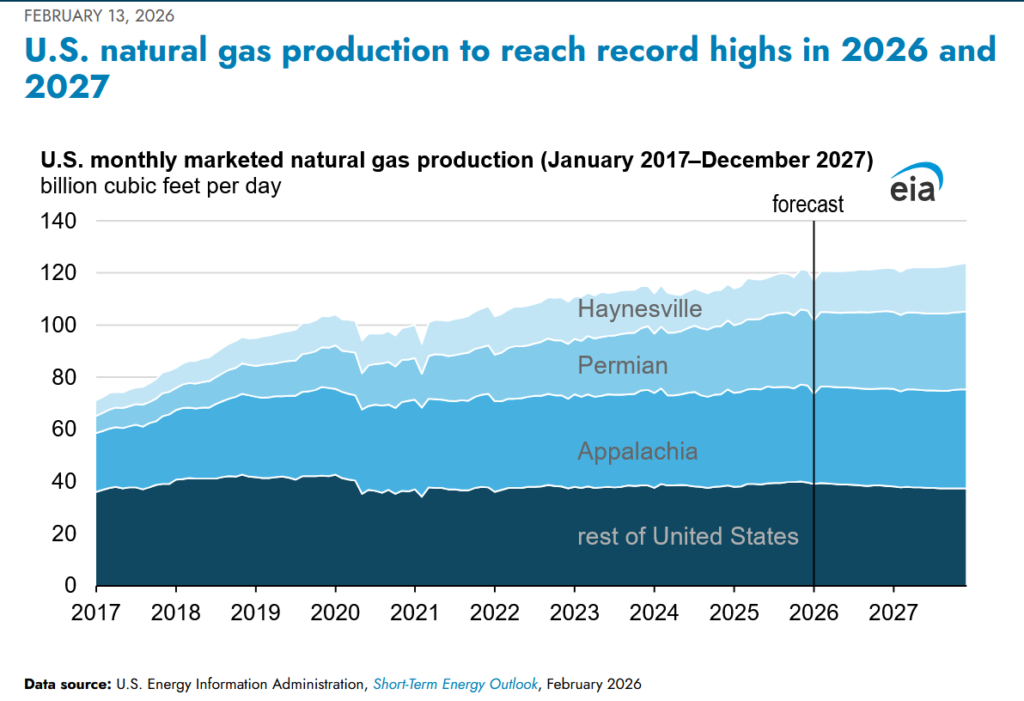
Source Credit: EIA, 2026
When most investors hear “oil and gas investing”, they generally think of energy stocks, MLPs, or sector ETFs. Those are financial instruments traded on public exchanges and often correlate with the broader equity market.
However, direct oil and gas investing is different. It is participation in the production of a physical asset: a working interest in a well or a royalty interest tied to that well’s revenue. Investors hold a share of the underlying production for as long as the well produces hydrocarbons economically.
This distinction matters because the return profile, the risk profile, the tax treatment, and the correlation to other assets all differ. Public energy stocks rise and fall with sentiment, sector rotation, and macro flows. A producing well pays its working-interest holders based on barrels produced, prices realized, and operating costs incurred. The underlying drivers are more physical, not financial.
For accredited investors asking whether oil and gas is a good investment in 2026, the relevant comparison is not ‘energy stock versus the S&P 500’. Instead, it is “direct production participation versus the rest of my diversified portfolio”.
The Four-Pillar Case for Oil and Gas in 2026
Sophisticated investors generally evaluate the asset class against these four pillars. They are:
- Diversification & Lower Correlation
Oil and gas cash flows are tied to barrels sold, not to quarterly earnings calls or index flows. During periods of equity market stress, well-level distributions continue for as long as production continues. The US Energy Information Administration, simply known as the EIA, projects continued domestic production growth into the late 2020s, supported by efficiency gains in shale basins. For a high-net-worth portfolio dominated by public equities and bonds, an allocation to producing wells offers a different kind of return driver.
- Tax Efficiency
The US tax code treats upstream oil and gas more favourably than almost any other asset class accessible to private investors. Intangible drilling costs (IDCs) are typically 100% deductible in Year 1. Tangible equipment depreciates over 7–10 years. The depletion allowance shelters a portion of ongoing income.
For high-income investors, the after-tax return on a working-interest investment is often materially higher than the pre-tax headline. However, we always recommend that our investors consult their tax advisor on how these provisions apply to their specific tax situation.
- Inflation Protection
Real assets tied to commodity prices tend to track, and often outpace, broad inflation. When the cost of fuel, transport, and manufactured goods rises, the cost of the underlying commodities tend to rise in tandem. Within these scenarios, fixed-income investments lose real purchasing power. Producing wells, however, often do not.
- Real, asset-backed cash flow
Real, asset-backed cash flow is the fourth pillar that distinguishes direct participation from financial-instrument energy exposure. Working-interest holders receive monthly distributions based on net revenue instead of the corporate dividend policy. The cash flow is generated by physical production, then sold at prevailing market prices, with operating costs and royalties netted off. This is income from a productive asset, not income from a security.
The Three Real Risks Investors Should Understand
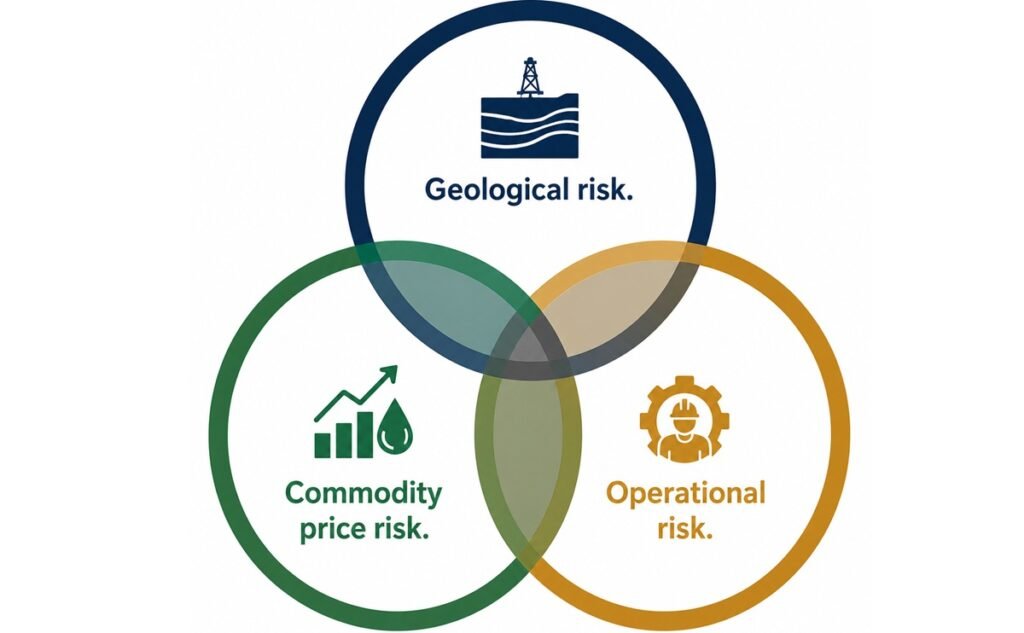
To honestly answer the question of whether “oil and gas is a good investment in 2026?”, it requires pinpointing the risks. There are three main risks, and every investor in the asset class should understand what they are.
1. Geological risk.
A new well may not produce as expected. Geology is studied, modeled, and de-risked by also cross-referencing nearby production data. However, until the well is drilled and produces, the projected output is an estimate. Sophisticated operators reduce drilling risk by working in proven basins, using multiple data sources, and offsetting from successful nearby wells.
2. Commodity price risk.
It’s hardly a surprise that oil and gas prices are volatile. A well’s economics depend on the realized price per barrel and per Mcf (natural gas is priced per thousand cubic feet) over its production life. Investors reduce this risk by “stress-testing” economics at conservative price projections by diversifying investments into multiple wells, and across different geographic locations and production stages, contrary to investing in one singular well.
3. Operational risk.
Execution depends heavily on the operator of the well. The same geology, drilled by two different operators, can produce very different results. It’s important to review an operator’s track records, evaluate their basin-specific experience, and their co-investment alongside outside capital. These are among the most important variables an investor can, and should, evaluate.
How Some Investors Think About Position Sizing
Some family offices and advisers have historically discussed allocating approximately 5–10% of a diversified portfolio to direct oil and gas investments. This range is intended as a general point of reference rather than a recommendation. Appropriate position sizing is highly individual and depends on factors such as investment objectives, risk tolerance, liquidity needs, and overall portfolio construction. Sovereign Energy Partners does not recommend any specific allocation. A commonly cited rationale is that an allocation should be meaningful enough to contribute to overall after-tax cash flow, yet measured enough that the outcome of a single investment does not disproportionately affect the wider portfolio.
As an illustration of the mechanics of spreading a position rather than concentrating it, an investor might divide a position across three working-interest positions with different operators and basins, plus a small royalty position. The working-interest positions provide IDC deductions in Year 1 and a monthly cash flow with upside; the royalty position smooths revenue volatility. Again, the circumstances of each investor’s specific situation contribute to portfolio sizing, and all allocation decisions should be made alongside your tax advisor.
Why 2026 Specifically for Investing In Oil and Gas?
In many ways, the case for this asset class is structural rather than cyclical. The EIA’s most recent reference case shows that US oil production will remain elevated through the late 2020s, with natural gas demand supported by domestic power generation and the LNG export build-out.
The International Energy Agency (IEA) projects that global oil demand will continue to grow into the late 2020s, with the peak pushed back from earlier estimates. Inflation expectations remain elevated relative to the pre-pandemic baseline, supporting the inflation-hedge case. And tax provisions for IDCs, depletion, and equipment depreciation remain intact in the current US tax code.
For accredited investors who already hold a diversified equity and fixed-income portfolio, 2026 looks like a reasonable year to add or rebalance an allocation to direct oil and gas. Provided, however, the investor follows a disciplined deal-evaluation process and works with operators who co-invest alongside outside capital.
When Oil and Gas is Not a Good Investment
It is worth being transparent about oil and gas investing. Direct oil and gas investment is not an appropriate investment for someone who does not qualify as an accredited investor, needs short-term liquidity, is unable to tolerate the variability of monthly distributions, or someone who is unwilling to hold a position for the full life of a producing well.
It is also not a good fit for investors who want a single-headline-number return without engaging with the underlying economics of each project. The asset class rewards investors who conduct thorough research and who treat each opportunity as a structured evaluation.
Frequently Asked Questions
Is oil and gas a good investment in 2026?+−
How much do I need to invest in oil and gas?+−
Do I have to be an accredited investor?+−
What’s the difference between oil and gas stocks and direct investment?+−
What returns are realistic?+−
Sovereign Energy Partners: In It With You
Sovereign Energy Partners is a US-focused energy investment platform and a subsidiary of Consolidated Energy Holdings, a UK-headquartered energy and natural resources group. Sovereign Energy Partners provides accredited investors structured access to upstream US oil and gas opportunities, focusing on operator alignment and transparent deal evaluation.
Free Investor Guide
Your complete guide to U.S. oil and gas investing
Download our complete and illuminating Investor Guide to learn everything there is to know about investing in the U.S. oil and gas industry.
Disclaimer
This article is for educational purposes only and does not constitute investment, legal, or tax advice. Oil and gas investments involve risk, including the potential loss of principal. Tax treatment varies by individual circumstances. Consult your tax advisor before making any investment decision. Securities described are offered only to verified, accredited investors under applicable SEC exemptions.