

Why invest in oil in 2026? For US accredited investors, the answer rests on four pillars that no single financial instrument easily replicates: portfolio diversification through real assets, tax efficiency unique to upstream energy, a potential inflation-hedging characteristic some investors cite, tied to commodity prices, and cash flow from physical production. Direct oil and gas investment, typically structured as working interests, royalty interests, or direct participation programs, offers ownership in producing and/or near-producing assets rather than shares of a public company. For high-net-worth individuals and family offices building a balanced long-term portfolio, this combination is among the reasons some investors consider oil and gas as part of a diversified portfolio in 2026.
This article expands on each of the four pillars that accredited investors use to evaluate the asset class and ends with a practical FAQ for new investors. For readers looking to go beyond the fundamentals outlined in this article, the downloadable comprehensive Investor Guide offers a wider perspective on U.S. oil and gas investing.
Why Invest in Oil? The Short Answer
The short answer to why investing in oil and gas assets may be a good move for you is that oil and gas wells produce real, asset-backed cash flow. When you hold a working interest, you own a share of the production. When the well sells barrels and Mcf, you receive your share of the net revenue, generally monthly, for as long as the well economically performs. There is no quarterly earnings call, no buyback program, no reliance on dividend policy.
Income comes directly from a physical asset doing what it was designed to do: producing hydrocarbons ready for sale on the market. This single distinction, direct ownership of production rather than a financial claim on a company, is the structural reason why investors invest in oil. Everything else follows from there.
Pillar 1: Diversification
Public equity portfolios in the United States are concentrated. The largest ten companies in the S&P 500 routinely make up over 30% of the index. Bond portfolios behave like duration-weighted bets on rates. International allocations correlate with US risk-on/risk-off cycles. For a high-net-worth investor, finding a meaningful source of return that is not tightly correlated with the rest of the portfolio is often challenging.
Direct oil and gas investments, in contrast, behave differently. Their returns are driven by production volumes, realized commodity prices, and operating costs instead of index flows or quarterly earnings beats. During periods of equity market stress, well-level distributions continue as long as production continues. The Energy Information Administration (EIA) shows that US oil production has remained robust through multiple equity market downturns in recent years. The uncorrelated nature of these two asset classes is exactly what diversification is supposed to provide
This is one of the most straightforward reasons why investors invest in oil. It adds a return driver that is structurally different from the rest of a typical US portfolio.
Pillar 2: Tax efficiency
Very few asset classes accessible to private US investors are treated as favourably by the US tax code as upstream oil and gas. These are deliberately attractive. Federal policy has long encouraged domestic energy production, and the resulting deductions are some of the most powerful tools in tax-efficient portfolio construction.
These tax provisions are familiar to experienced investors, but it’s worth restating:
- Intangible drilling costs (IDCs), associated with labor, drilling fluids, rig services, and similar non-tangible expenditures, are typically 100% deductible in Year 1 for working-interest holders.
- Tangible equipment, like the casing, wellhead, and surface equipment, generally depreciates on an accelerated schedule over 7–10 years.
- Depletion allowance refers to an ongoing deduction that shelters a portion of production income, recognizing that each barrel produced reduces the underlying reserve.
- Active vs passive treatment. Working-interest income is generally treated as active for tax purposes, allowing deductions to offset other ordinary income.
Let’s say an investor commits $50,000 to a working-interest position. If a portion of that capital is allocated to IDCs, the investor may be able to deduct the deductible portion against ordinary income in the year incurred, provided they make the relevant election. The actual benefit depends entirely on the investor’s tax bracket, state, AMT position, and current law, and may be materially different or unavailable. This is general information and does not constitute tax advice: always consult your tax advisor. Also note that after-tax economics are materially different from pre-tax economics. As we often say, “what you keep matters more than the headline number”. However, it’s important to consult your tax advisor about how these provisions apply to your individual circumstances first.
Pillar 3: Inflation Protection
Holding inflation-resilient assets has been a recurring theme in US portfolio construction since the post-pandemic inflation cycle. Bonds lost real purchasing power. Cash positions eroded. Equities, while volatile, generally tracked inflation imperfectly and unevenly.
Real assets tied to commodity prices may behave differently from fixed income during inflationary periods, though this is not assured and oil and gas carries its own volatility. When the price of oil and natural gas rises with the broader cost of goods, the revenue per barrel produced rises too. Operating costs also rise, but the structure of upstream economics, particularly for proven, low-decline producing wells, generally preserves margin in inflationary periods. Real assets tied to commodity prices may behave differently from fixed income during inflationary periods, though this is not assured and oil and gas carries its own volatility.
Inflation protection is another reason why investors invest in oil. It is not a perfect hedge, and no single asset is, but in a portfolio context, the inflation-protection profile is hard to replicate elsewhere.
Pillar 4: Variable Cash Flow from Production
The fourth pillar is the one most investors come and stay for: monthly distributions from producing wells. The following is not intended as a projection, but rather a simple illustration of how proportional ownership works: A 5% interest in a well’s net revenue would receive 5% of that net revenue in any given month. Actual amounts vary with production and prices and decline over time. . Actual amounts vary with production and prices and decline over time. Multiplied across multiple wells, the aggregate monthly cash flow can be a meaningful supplement to a high-net-worth investor’s income and is entirely independent from public-market dividend cycles.
The cash flow does decline over time. Wells follow a natural decline curve: highest production in early life, gradually decreasing thereafter, with a long tail of lower but stable production (depending on the type of well). But the cash flow is tangible and recurring. Investors are best served when understanding the shape of returns over the well’s full life rather than focusing on the first year of returns alone.
How Some Investors Think About Position Sizing
Some family offices and advisers have historically discussed allocating approximately 5–10% of a diversified portfolio to direct oil and gas investments. This range is intended as a general point of reference rather than a recommendation. Appropriate position sizing is highly individual and depends on factors such as investment objectives, risk tolerance, liquidity needs, and overall portfolio construction. Sovereign Energy Partners does not recommend any specific allocation. A commonly cited rationale is that an allocation should be meaningful enough to contribute to overall after-tax cash flow, yet measured enough that the outcome of a single investment does not disproportionately affect the wider portfolio.
As an illustration of the mechanics of spreading a position rather than concentrating it, an investor might divide a position across three working-interest positions with different operators and basins, plus a small royalty position. The working-interest positions provide IDC deductions in Year 1 and a monthly cash flow with upside; the royalty position smooths revenue volatility. Again, the circumstances of each investor’s specific situation contribute to portfolio sizing, and all allocation decisions should be made alongside your tax advisor.
What to Look For When Choosing a Deal
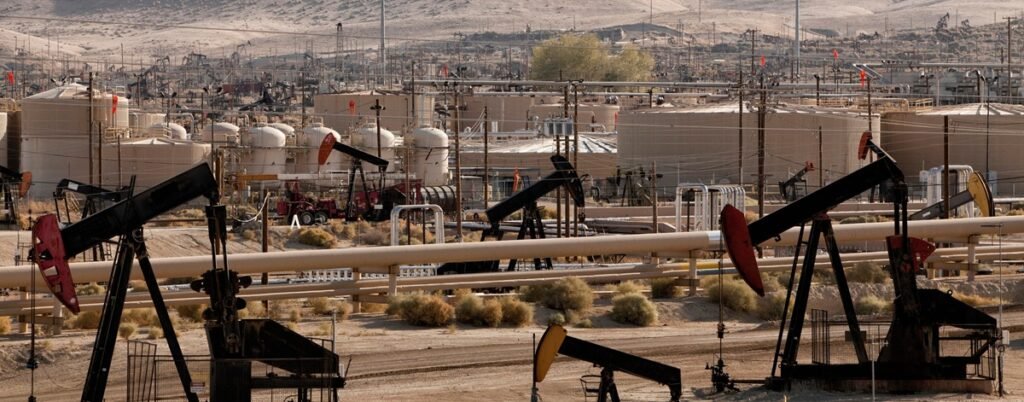
Investors who decide to invest in oil should evaluate every opportunity against a disciplined framework: operator track record in the specific basin, geological data, and offset well performance, well economics including break-even pricing, and risk-factor sensitivity.
Operator co-investment (where the operator commits its own capital alongside outside investors) is one of the most important tools to evaluate an operator’s commitment to a deal. We cover this evaluation framework in detail in our deal-evaluation guide and due diligence checklist. Deepen your understanding of the oil and gas industry and investing in it even more by downloading our comprehensive Investor Guide here.
Frequently Asked Questions
Why invest in direct oil & gas deals?+−
How do some investors think about position sizing?+−
Do oil and gas investments pay monthly?+−
Are oil and gas investments tax-advantaged?+−
Can I invest in oil and gas if I’m not accredited?+−
With Sovereign Energy Partners
Sovereign Energy Partners is a US-focused energy investment platform and a subsidiary of Consolidated Energy Holdings, a UK-headquartered energy and natural resources group.
Sovereign Energy Partners provides accredited investors structured access to upstream US oil and gas opportunities, with a focus on operator alignment, transparent deal evaluation, and education-led investor relationships.
Free Investor Guide
Your complete guide to U.S. oil and gas investing
Download our complete and illuminating Investor Guide to learn everything there is to know about investing in the U.S. oil and gas industry.
Disclaimer
This article is for educational purposes only and does not constitute investment, legal, or tax advice. Oil and gas investments involve risk, including the potential loss of principal. Tax treatment varies by individual circumstance. It is recommended to consult your tax advisor before making any investment decisions. Securities described are offered only to verified accredited investors under applicable SEC exemptions.