
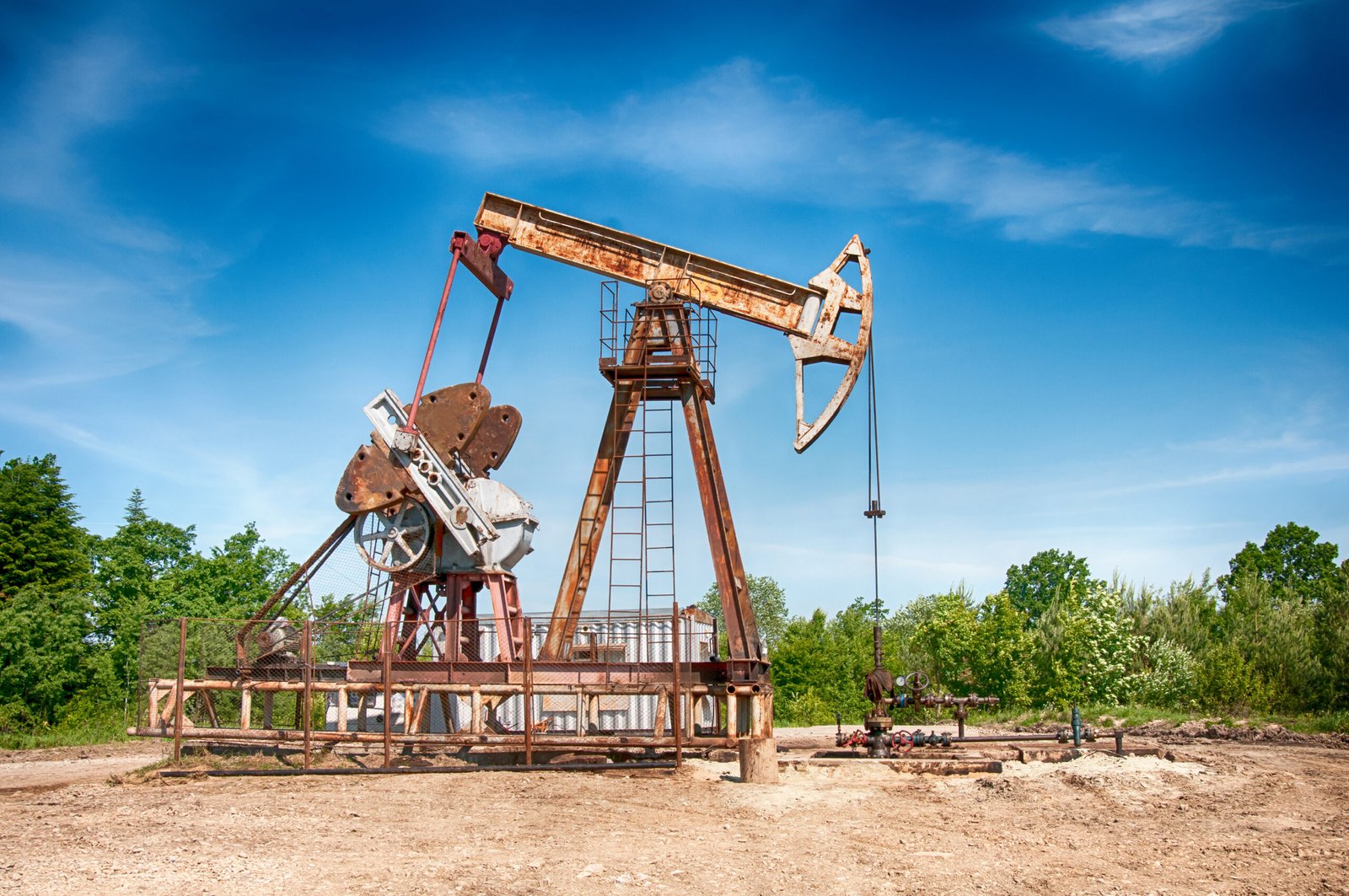
The big bills for an oil well arrive before it makes a single barrel. Knowing how a well is built shows an investor where that money goes, and why the early steps decide so much.
The short answer: an oil well is drilled with a turning bit and lined with steel pipe, cemented in place as it goes. Then it is “completed.” Holes are punched through the pipe and, in most U.S. shale wells, the rock is cracked so oil can flow in.
The easiest way to see how oil wells are drilled is to follow one. This guide tracks one modern well in West Texas, from first form to first oil.
Step One: The Permit and the Plan
Our well starts on paper. Geologists pick one layer of rock, deep underground, likely to hold oil. The operator, the company that runs the well, secures a lease to drill there.
Next comes the permit. In Texas, a permit from the Railroad Commission, the state’s oil and gas regulator, “is one of the first steps,” it says.
Then engineers plan how deep the well goes, where it turns and how much steel pipe it needs. Much of the cost is decided right here, at a desk. The operator prices the plan in a budget called an AFE and sends it to the other owners before work starts.
That is good news for the well’s owners, who see the plan and the price before the money is spent. But a plan is still an estimate, and the rock has the final say.
Step Two: Building the Pad
Next, a crew clears and levels a patch of ground for the rig. This work site is called the pad. One pad often holds several wells. The first steel pipe, the conductor, goes in here. It is the well’s foundation, and it stops loose soil caving in.
How Oil Wells Are Drilled: Down, Then Sideways
Now the rig arrives. The first day of drilling is called spudding the well.
The rig turns a bit on the end of a long steel pipe. A fluid called drilling mud is pumped down the pipe. It cools the bit, carries rock chips up and holds back pressure in the rock.
Our well goes straight down first. Then the crew bends it through a gentle curve, about a quarter of a mile across, according to Stanford’s Understand Energy program. At the bottom of the curve, the bit is running sideways.
Why turn? Rock layers are far wider than they are thick. A straight well crosses the oil layer in a few feet. A sideways well can stay inside it for miles. Think of a straw pushed through a thin slice of cake, compared with one slid along inside it.
This sideways stretch is called the lateral. Like the average new Permian well, ours runs about two miles sideways, according to the U.S. Energy Information Administration. The crew steers it all the way.
One large Permian operator, Diamondback Energy, reported its wells took close to eight days on average to drill in 2025 (operator-reported and unverified). Timings vary by operator and rock.
That is how oil wells are drilled in most U.S. shale basins today. When the bit reaches the end of the planned hole, the well is at total depth.
For the owners, rig time costs money every day, so days saved are money saved. But stuck pipe, lost mud or bad weather can add days, and the bill grows.
Casing and Cementing: A Telescope of Steel
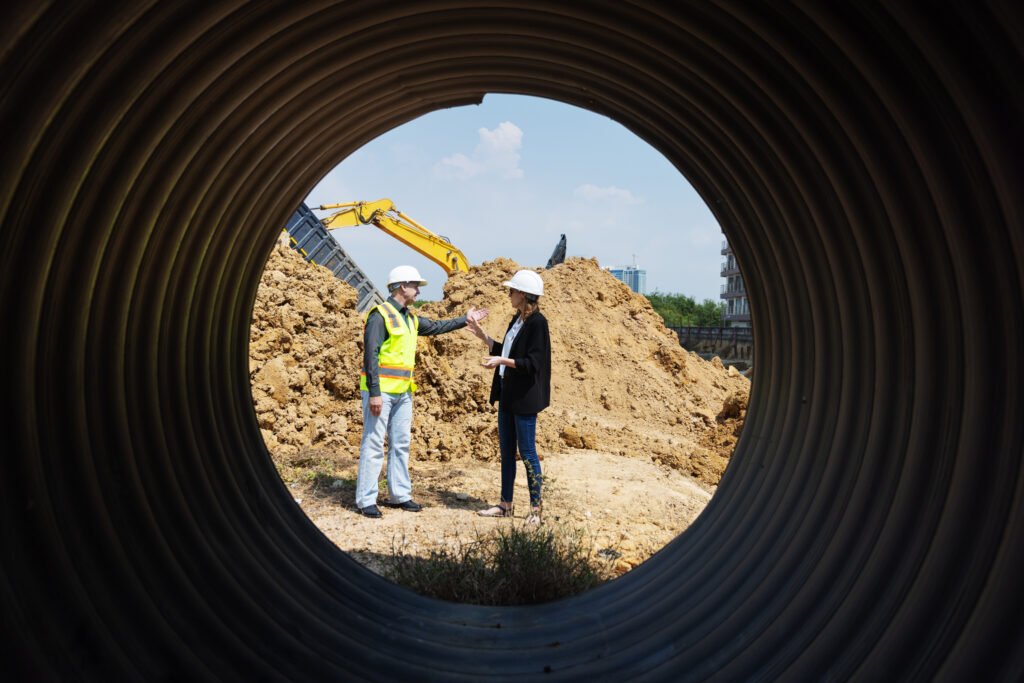
As our well is drilled, it is also lined with steel pipe called casing, sealed in place with cement. Casing protects the well and the water around it. It goes in as the hole gets deeper, in sections that fit one inside the other, like a telescope. After the conductor comes surface casing, which seals off fresh water. Deeper down, intermediate casing may shut out salt water or high pressure. Last comes production casing, which runs down to the target rock.
Each section is cemented before drilling goes deeper. In Texas, surface casing must protect all usable water, with cement filling the gap outside the pipe up to the surface.
Investors never see this step, but it matters. Close rules aim to protect the water and the well. Still, a cement job can fail, and repairs cost time and money.
The Moment of Truth
At total depth, the operator has a choice to make. Tools lowered into the well record the rock. These records, called logs, are filed with the state and help show whether the well is worth finishing.
This is where the risk shows. If a well cannot produce enough oil to justify finishing it, it is a dry hole. It is sealed and left, and the drilling money is gone.
Our well looks good.
Oil Well Completion: Opening the Rock
Oil well completion turns a sealed, lined hole into a well that can produce. The steel and cement that protect the well also keep the oil out, so the crew must open a way in.
First, they pressure-test the casing to make sure it holds. Then they work along the lateral in sections called stages, starting at the far end.
In a common method, a cable carries a plug and perforating guns down the well. The plug seals off the stage just finished. The guns punch holes through the steel and cement into the rock.
Then comes hydraulic fracturing, or fracking. Water and sand are pumped down at high pressure. The pressure cracks the rock, and the sand holds the cracks open so oil can seep out. FracFocus, the national registry of what operators pump, says most mixes are 98% to 99% water and sand. Stage by stage, the crew works back toward the curve.
Completion usually takes one to five weeks, according to Stanford.
For the owners, completion is a major cost, and it comes after the drilling money is already spent. If a stage goes wrong, such as sand blocking the well, the extra cost can be high.
Cleaning Up: Flowback
With the last stage done, the crew drills out the plugs. They fit tubing inside the casing, a wellhead on top and a stack of valves known as a Christmas tree.
When the well is opened, the first thing up is not oil but the fracking water, called flowback. Oil and gas follow behind it.
First Production: The First Barrel
Crews set up tanks, lines to a pipeline, and separators that split the oil, gas and water apart. Later, as pressure in the rock falls, a pumpjack may help lift the oil.
Until the well is hooked up, there is nothing to sell. A delay in crews or pipeline space pushes back the first sale. From a form on a desk to oil in a tank, every step was paid for before that sale.
Why Drilling and Completion Costs Matter to Investors
Drilling and completion costs matter because they come before the well produces anything. The well’s owners, the companies or partnerships that hold a share of it, pay up front, on an estimate.
Depth, lateral length, hard rock and the number of stages all drive the cost. So do the prices of rigs, crews and sand, and those prices move. In the Dallas Fed’s latest energy survey, more firms reported rising costs than falling ones.
Understanding how oil wells are drilled helps an investor read a well’s budget. What investors look at:
- the operator’s experience with this kind of well in this area;
- how the cost estimate compares with nearby wells;
- what happens if the well is dry or the cost runs over.
Weighing It Up
The case for this part of oil and gas is real. The methods are well known across U.S. shale, and wells are now longer and, at some operators, faster to drill. Water rules are detailed. And costs are set out in a written budget before the rig moves.
The risks are just as real. A well can find too little oil to finish, and costs can run over. Two wells on the same pad, drilled the same way, can turn out differently because the rock differs. Engineering cannot remove geology.
The Takeaway
A modern oil well is built in weeks, under close state rules. The money goes in before the first barrel, and much of the risk sits in the rock. Knowing the steps helps an investor judge a budget and an operator, then make their own call.
Frequently Asked Questions
How long does it take to drill an oil well?+−
What does it mean to spud a well?+−
What is oil well completion?+−
Is fracking part of completing an oil well?+−
What happens if an oil well is dry?+−
Next Step
Next, read What Is an AFE in Oil and Gas? A Guide for Investors, on how a well’s budget is set out before the rig moves.
For the wider picture, read How to Start Investing in Oil and Gas Wells.
Get our weekly posts by email.
Accredited investors who want to learn about opportunities as they become available can get in touch.
About Sovereign Energy Partners
Sovereign Energy Partners is a private, U.S.-focused oil and gas company. When available, investments are offered through project-level limited partnerships, with SEP GP LLC serving as general partner and investors participating as limited partners. Investors hold an interest in the partnership, not a working interest themselves, and have no management rights.
Sources
- S. Energy Information Administration, “Longer wells boost Permian crude oil and natural gas production,” August 19, 2026. https://www.eia.gov/todayinenergy/detail.php?id=67984
- S. Energy Information Administration, “Oil wells drilled horizontally are among the highest-producing wells,” November 4, 2016. https://www.eia.gov/todayinenergy/detail.php?id=28652
- S. Energy Information Administration, “Well completions per location more than double in Lower 48 states as technology advances,” May 7, 2025. https://www.eia.gov/todayinenergy/detail.php?id=65224
- S. Energy Information Administration, Definitions, Sources and Explanatory Notes (crude oil wells), undated (accessed October 2026). https://www.eia.gov/dnav/pet/TblDefs/pet_crd_wellend_tbldef2.asp
- Railroad Commission of Texas, “RRC Staff Processing Standard Drilling Permits in Two Days,” January 17, 2020. https://www.rrc.texas.gov/news/rrc-staff-processing-standard-drilling-permits-in-two-days
- Texas Administrative Code, 16 TAC §3.13, Casing, Cementing, Drilling, Well Control, and Completion Requirements (amended effective February 18, 2025), via Cornell Legal Information Institute. https://www.law.cornell.edu/regulations/texas/16-Tex-Admin-Code-SS-3-13
- Texas Administrative Code, 16 TAC §3.16, Log and Completion or Plugging Report, via Cornell Legal Information Institute (accessed October 2026). https://www.law.cornell.edu/regulations/texas/16-Tex-Admin-Code-SS-3-16
- S. Department of Energy, Office of Fossil Energy, and NETL, Modern Shale Gas Development in the United States: A Primer, April 2009. https://www.energy.gov/fe/downloads/modern-shale-gas-development-united-states-primer
- Society of Petroleum Engineers, Journal of Petroleum Technology, “Dissolvable Plug and Perf System Eliminates Mill-Outs in Multistage Stimulations,” May 31, 2015. https://jpt.spe.org/dissolvable-plug-and-perf-system-eliminates-mill-outs-multistage-stimulations
- FracFocus, “What Is Fracturing Fluid Made Of?” and “Hydraulic Fracturing,” undated (accessed October 2026). https://fracfocus.org/learn/what-is-fracturing-fluid-made-of ; https://fracfocus.org/learn/hydraulic-fracturing
- Stanford University, Understand Energy, “Drilling, Completing, and Producing from Oil and Natural Gas Wells,” updated December 2025. https://understandenergy-prod.stanford.edu/energy-resources/fossil-fuel-energy/drilling-completing-and-producing-oil-and-natural-gas-wells
- Diamondback Energy, Letter to Stockholders (full-year 2025), SEC Form 8-K Exhibit 99.2, February 23, 2026. https://www.sec.gov/Archives/edgar/data/1539838/000153983826000006/diamondbackex992-2x23x26.htm
- Federal Reserve Bank of Dallas, Dallas Fed Energy Survey, Third Quarter 2026, September 30, 2026. https://www.dallasfed.org/research/surveys/des/2026/2603
Free Investor Guide
Your complete guide to U.S. oil and gas investing
Download our Investor Guide to learn more about investing in the U.S. oil and gas industry.
Disclaimer
For informational purposes only. Not an offer to sell securities. Investment opportunities are available to accredited investors only, and only through official offering documents. Consult your financial, legal & tax advisers before investing. Past performance is not indicative of future results. All investments involve risk, including loss of principal. Oil & gas investments are speculative and high-risk.